
Hapag-Lloyd Sued by Meat Importer for Over $1.1M Over Unfair D&D Fees
Hapag-Lloyd Sued by Meat Importer for Over $1.1 Million in Damages
Hapag-Lloyd has recently become embroiled in a high-profile dispute.
According to the official website of the U.S. Federal Maritime Commission (FMC), Orleans International, a meat importer, has filed a complaint against the shipping giant, accusing it of imposing unreasonable detention and demurrage charges (D&D fees) during severe port congestion amid the COVID-19 pandemic.
As described in the complaint, port conditions at the time were “a nightmare.” As a meat importer, Orleans required its goods to be transported and stored in temperature-controlled containers, reefer containers or freezers to maintain their usability. However, with containers blocking access, Orleans was simply unable to retrieve its own cargo.
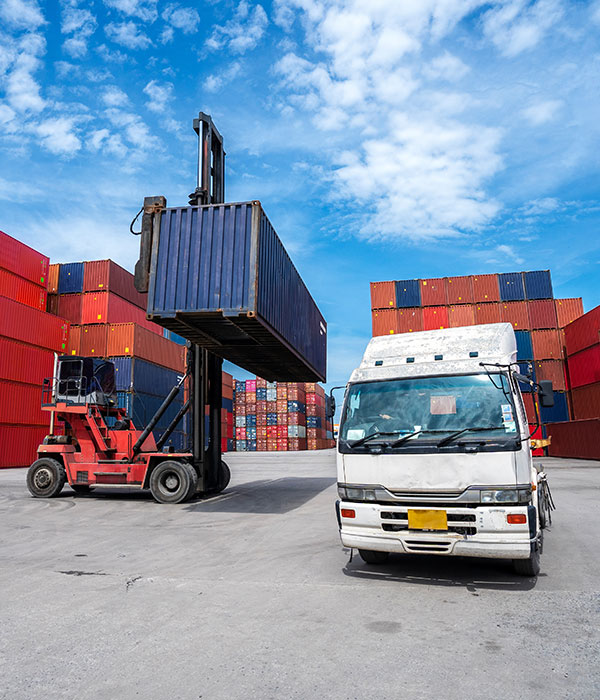
Terminal operators explicitly stated: “Hapag-Lloyd containers have been stacked beneath other cargo. These stacks must be removed from top to bottom. We cannot release any containers at the bottom until those on top have been taken away.” The complaint further noted that, in addition to physical blockages, trucking companies faced equipment shortages and insufficient booking slots, leaving Orleans’ teams and agents unable to collect the containers—a situation entirely beyond its control.
Foreign media reported that the containers blocking the access were likely Hapag-Lloyd’s own. Orleans implied this in its complaint, with an agent writing in an email: “A batch of your own inbound goods is stacked on top of our containers, preventing us from accessing the products already sold to you.”
Despite these objective obstacles, Hapag-Lloyd continued to charge the company approximately $3,600 per standard container per day in D&D fees. More seriously, the prolonged delays caused the goods inside the containers to spoil. The complaint clearly stated: “The defendant’s (Hapag-Lloyd) imposition of these fees directly and materially harmed the plaintiff (Orleans), forcing it to pay unreasonable and unjust charges.”
“The defendant’s actions also caused the plaintiff other losses, including delays, failure to receive time-sensitive goods, reduced sellable inventory, unnecessary expenses, lost profits, as well as related attorney’s fees and litigation costs.”
Based on these facts, Orleans is claiming more than $1.1 million in damages. While this is not the largest claim filed against a shipping carrier through the FMC, it ranks among the highest in recent cases.
Notably, after a surge in claims in 2023 and 2024, industry insiders had predicted a decline in subsequent complaints. However, this incident shows the issue is far from resolved.
Legal analysts pointed out that companies suffering the largest absolute losses have already filed lawsuits, “but this does not mean millions of dollars in unreasonable D&D fees do not exist in the market. On the contrary, these charges are likely borne by thousands of small shippers, each paying around $20,000 under duress.”
The problem is that the legal cost of filing a claim with the FMC is also approximately $20,000. For a small shipper, losing the case would mean doubling the loss—a risk that deters many. Furthermore, the FMC’s regulatory stance under the Trump administration remains to be seen. This explains why high-value cases like Orleans’ pursuit of claims, though not mainstream in number, carry greater symbolic significance.